Latest Book Reviews and Comments
Such a thrill to read with creativity abound! Wonderful vocabulary. This story leaves a bewildering pondering or curiosity of the universe and humanity. The Host offers a different perspective of an alien takeover in such an interesting and unfamiliar way. I cannot wait for the other books anticipated to follow this storyline!
I found Crenshaw to be an exciting and event full book about a boy and his imaginary cat friend. For me it makes it seem that Jackson knew what to do all along and his mind made it seem like it was Crenshaw's idea and not his.
Writer spends more time on random sites trying to gain exposure then give release schedules or holding to them, steer clear till he fixes.
I wouldn't touch anything by the author till update and schedules are even closely fullfilled.
Even though S.G. Blaise is a newer author, her work continues to amaze me with her impeccable fast-paced storytelling and astonishing world-building. True Teryn takes the storyline from The Last Lumenian to the next level by giving the reader a deeper look into the politics, magic, and lore, especially for Teryns. The Teryn's were represented in The Last Lumenian as the most dangerous army in the Seven Galaxies, so it was interesting to see how S.G. built off that idea.
Read more ...
I found myself appreciating the interactions between Lilla and her future father-in-law and all of the other new characters in this book. I loved how this book has more of a quest feel to it. The fast-paced writing style and descriptive scene writing made me feel like I was right there with Lilla from start to end. I was happy to see that readers got to experience more planets within the Seven Galaxies to get a grasp of how big their universe truly is.
I would highly recommend this book for any reader who loves sci-fi, fantasy, adventure, and especially quest. I hope one day this book series gets developed into a tv show or movie. It would be amazing to see on screen!
S.G. continues to amaze me with the Last Lumenian series. Proud Pada was a fun, intergalactic, mystery adventure that kept me on my toes! I’m pretty sure I read the entire book in two sittings because I didn’t want to put it down. I absolutely love the relationship S.G. has created between Lilla and Callum. Their dynamic was so intriguing to read and the mix with Moria just added to it even more. But it was great to see more of the worlds within the Seven Galaxies to understand the vastness of the universe S.G. is creating. I hope we get to see more galaxies in future books.
Read more ...
Read this series!!! I highly recommend for any reader who loves sci-fi, fantasy, and adventure; especially quest. I’m so excited to see what S.G. does next!
I LOVED this book SO much and I REALLY recommend it. This message is for Roshani Chokshi: MAKE A SIXTH BOOK OF ARU SHAH AND A MILLION MORE PLEASE.
The ‘Prince of Blue Flowers’ novel is an Asian fantasy adventure story. The protagonist of the story, a boy named Hatsukoi, goes to a monastery for his pranks, but soon runs away in search of adventure.
Magical Asia, in which the reader finds himself, is similar to medieval China, or rather, to the world of ‘lakes and rivers’ of the famous Chinese epics and ‘wuxia’ adventure novels. Swaggering dukes, greedy governors, arrogant princes, industrious peasants, wise monks, and wandering warriors inhabit this world. Gods are there as well, busy with their own worries and problems.
Read more ...
Rich with colorful epithets and unusual proverbs, the language knits together fairy tales and a trickster novel, leaving an aftertaste of hidden poetry.
The adventures of Sun Wu-Kun, the tricks of Til Ulenspiegel and Khoja Nasreddin, the stories of Brother Rabbit — such associations arise while reading the ‘Prince of Blue Flowers’. In the humour that peeps between the lines, one can find echoes of novels and short stories by Robert Asprin and Terry Pratchett.
Under the guise of a light trickster tale lay a story about the roots of evil. It is a story about why it is easy to fool people who give in to their passions: greed, anger, ignorance.
“It won’t do for greedy people to swindle and get away with it. Here is a noble deed for my skills!” Our hero argues. But when his own bragging overcomes him, he himself gots into trouble. Luckily, as he understands that he became no better than his foes, the help gets on its way.
The moral of this book is simple: if you are greedy, angry, boastful, self-satisfied, and stupid, there will definitely be some trickster who will make you pay for your vices. Even if that trickster is yourself.
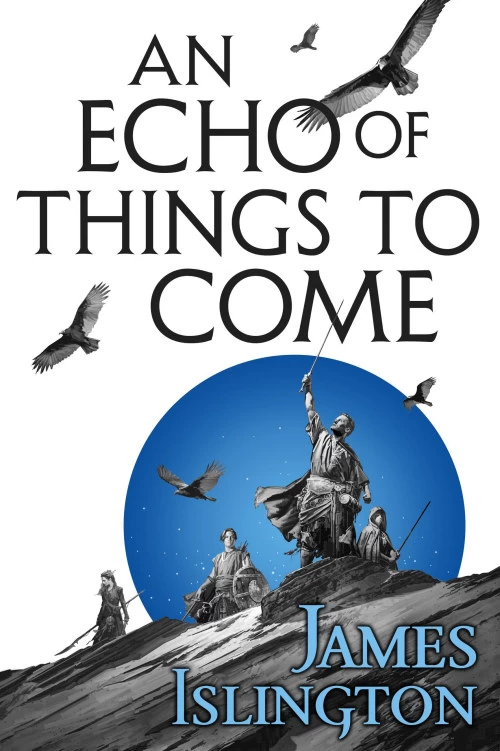
In the first book review, I said there were no similarities between Wheel of Time and The Licanius Trilogy. However, after reading the second book I noticed the resemblance, It’s of course not a fan fic of WoT but I noticed it in Caeden’s arc in particular, his constant battle between his past-self and present-self, similar to Rand and Lews Therin.
Read more ...
“The people with whom we are friends should never affect our morality; rather, our morality should affect with whom we are friends.”
The journey continues with Davian, Asha, Wirr, and Caeden, our four main characters.
My favorite character in the series is Caeden. After the surprising reveal in the first book, Caeden is trying to regain more of his memories to understand why he is who he is. Many mysteries are being revealed, and plot holes are being filled. The more we discover about Caeden, the clearer the story becomes.
Because Wirr is Gifted the Administrators do not want him to be part of their council. He struggles as a Northwarden to convince the Administration of the dangers of the Boundary, his mother in particular. Wirr also discovers his father’s journal, which answers questions about the rebellion 20 years ago.
The Elders in Tol Shen are not letting Davian and Ishelle deal with the Boundary. And Davian of course will not stand still and do nothing. While Asha is trying to find out how and where the Shadows disappeared.
I enjoyed this book cover to cover and that end adds more questions. One single flaw in the book is the characters’ development; they all have the same voice, except maybe Caeden. Honestly, this series needs to be at least five books. Three is not enough, I need more explanations, more depth, more details, and more characters. I know there is one book left. I hope it will have a satisfying conclusion though.
In my opinion the best book from this saga !
incomplete review… just a place to put my thoughts
—
I enjoyed reading this book up until the last chapters. My favorite character is sacrificed. I enjoyed seeing the development of Marasi and Ceresse. This series is one I have read multiple times and I know I will continue reading but I loved the comic relief my character offered, I wish that he was able to find redemption in a way that did not mean he had to die.
I am thrilled about the way the various sanderson worlds are connected afterall! I am looking forward to seeing these worlds collide. Some of the Gods in this book were new to me, but I recall shadesmar was mentioned multiple times as a means of interplanetary transport. I have read the stormlight archive. The main antagonist God automoy though was completely new to me. I am assuming she is from another series that I have not read though.
I was surprised that the main issue was stopping a bomb. It seemed a little simplistic to me in light of the problems that have seen with Sanderson books but I supposed because this is a metal/gun related world a bomb is a next natural step.
I don’t know how the next books will be without Wayne. I am going to miss him so much in this series.
The fire in the ancient Library of Alexandria was not an accident. Instead, the Library burned to protect itself and its dangerous secret: magical books. The Library survived in the form of a society of the same name, and every ten years the society recruits new members. The Atlas Six follows the training of the six newest member candidates, who are among the most talented magicians in the world.
Read more ...
The book's conspiratorial idea of a library staging its own destruction is undeniably original. The magic that appears in the book is also original, which Olivie Blake has not blatantly copied, at least not from any fantasy story that I know. The book manages to keep its secrets hidden and mislead its readers down the wrong paths until the very end. And at the end comes a surprise that is impressive, though nothing mind-blowing.
The characters in the book are beautiful, young, rich, clever, and immensely powerful all right, but not terribly interesting. I didn't really identify with any of them, except maybe Reina, who I think should have been featured more. The end of the story really felt a bit lackluster, possibly because it is only a staging point. That's right, there will be at least one sequel to this book. Naturally.
The social media buzz surrounding The Atlas Six has not been mere mass hysteria. I think the time I spent on this book wasn't wasted. However, it remains to be seen whether I will continue the series from now on.
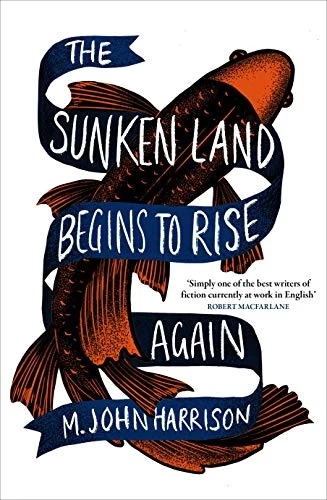
My rating just about says it all. 254 pages of descriptions of weather and just plain jiberish, pseudo-intellectual mumble jumble. 100 000 names of places. Nothing happens. No answers are received. Totally unsatisfying end. Do not waste your time on this. I gave three points because characterization is good, as always with Harrison. Still I´ll be waiting for the next one.
Tim Powers weaves together Chaos Mathematics, probability manipulation, Low Magic, gambling, skullduggery and Arthurian legend into a masterpiece. Possibly the best fantasy fiction ever written.
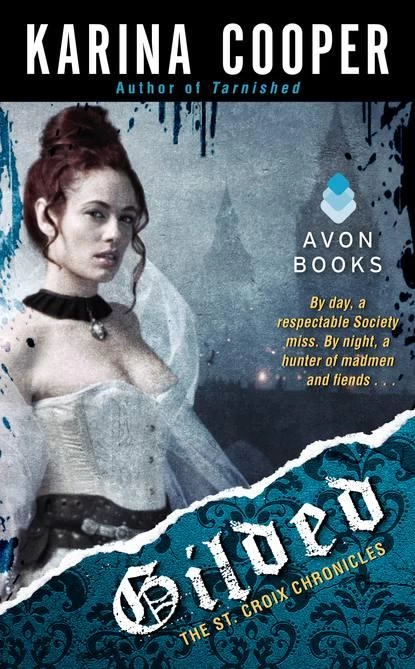
Love this series!, Sadly after this the rest aren't in print form.
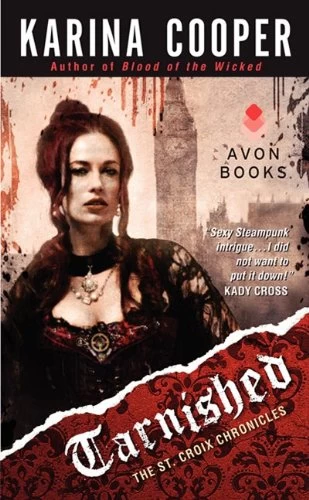
Read all of this series and you will be left wanting more!
Such a great book, I enjoyed it so much!
This is a book you must not miss out on, keeps you connected all the way to the finish and scrambling for the next . I'm so glad I Found this wonderful book!
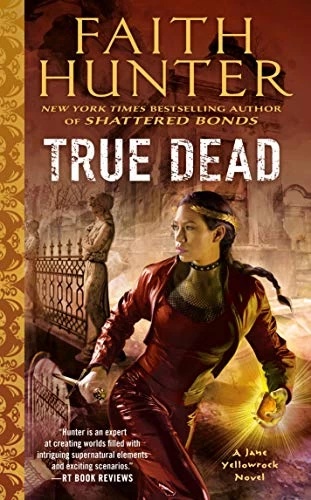
Another twister coming your way so don't miss out! It keeps getting better!
Tricky plots going on here, keeps getting closer to the truth I think. Don't miss out! I love this series!
Once again another delight to read in this series
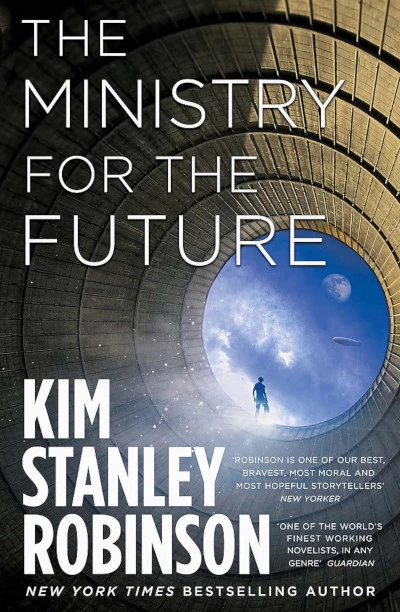
The Ministry for the Future is yet another massive snorter from Kim Stanley Robinson. The scale and multidimensionality of Robinson’s works are stupendous, as is his ability to combine hard facts with spellbinding fiction.
In this book, he is once again on the issue of climate change in building a refreshing science utopia. So no climate dystopia this time. The title of the book is quite dry, and there is a lot of serious matter in the work, which is, however, counterbalanced by emotional drama. As a whole, the work is sadly a bouncing superball, exhausting in places, especially for non-English-speaking readers. There is surprisingly little room left for intriguing sections in such a thick book as Robinson keeps banging ecology, economics, and politics into the reader’s ear.
Read more ...
Anyway, I’m glad I got to the end. There was no waste of time, by any means. No pain, no gain!
In a way, The Overstory would have deserved 10 stars just for the respect that I felt for Richard Powers after finishing the book. Without a doubt Powers has done a tremendous amount of background work for the book, and at least my expertise is not sufficient to prove any of his claims wrong.
Read more ...
There are as many as nine protagonists, who at first seem like a motley crew, but most of whom I grew fond of surprisingly strongly when the story progressed. After all, it's as much a story about people as it is about trees. The book is long and slow, a little like the trees themselves. The metaphor is hardly a coincidence. And no, the book isn't suitable for the hasty. You really have to stop by it to understand the wisdom that is conveyed by it. The same thing is urged in the book every now and then: if you stop and listen, you can hear the trees talking.
Powers invites his readers to learn more about trees, so that we could learn to understand and respect them. Still, the book doesn't preach, but really inspires to look at trees in a new way. That's what happened to me, at least. Sure, it also happened to me that from time to time I felt buried under all the philosophical reflection and the avalanche of information. I’m sure there’s a lot more to realize in the book for re-reading.
The title of the book is apt when playing with the ambiguity of the word "story". A small but charming detail.
From early on Red Rising reminded me of Dune by Frank Herbert. Power struggle in space centered on a young man. In Red Rising this young man, Darrow, just happens to be of low descent, unlike the high-born Paul Atreides. Later, the story began to be more reminiscent of certain YA dystopians, but I still suspect Pierce Brown has read his Dune.
Read more ...
The story kicks off strongly. The early events create tension and maintain interest excellently. Darrow seems to be a sympathetic guy. But then the schoolyard brawl begins, in which parents, teachers and other people try to get involved to the best of their ability. I never got interested in these kind of quarrels when I was a kid, and it wasn't much more engrossing, even though it occurred on Mars. In addition, Darrow became more or less monstrous as the hassle progressed.
I would say that the first part of the novel was whopping great. All the other parts were rather much more painful reading, but the very cliffhanger ending led me to believe that the sequel could very well raise the level of interest again.