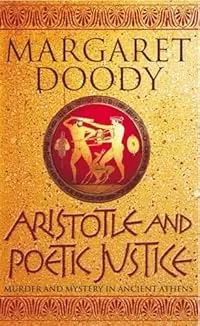
Aristotle and Poetic Justice
The great Greek philosopher heads to Delphi on the hunt for a kidnapped heiress in this series of "witty, elegant whodunits" (Times Literary Supplement).
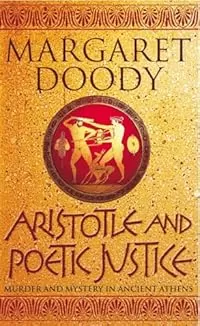
330BC: Alexander the Great has sacked Persepolis and won the greatest fortune the world has ever known. The night of the Silent Dinner, when Athens placates the spirits of the dead, passes with a creeping mist accompanied by eerie portents and a strange disappearance. Stephanos and his teacher, the philosopher Aristotle, are about to be drawn into solving the perplexing abduction case of Anthia, the heiress of a prominent silver merchant. All that is known is that the abductor and the heiress are on the road to Delphi and its ancient oracle—whose help may be needed when a murder complicates the case in this follow-up to the "eminently enjoyable" Aristotle Detective (Colin Dexter, author of the Inspector Morse Mysteries).
"Why did no one think of this before?"—The Times (UK)
Readers also enjoyed
Margaret Anne Doody
Margaret Doody, John and Barbara Glynn Family Professor of Literature and the first Director of the Ph.D. in Literature Program, is interested in literature of many languages and cultures. Her career is rooted in the study of the eighteenth century; she is the author of many articles on writers including Swift, Sterne and Austen, and of book-length studies of Samuel Richardson and of Frances Burney, as well as The Daring Muse: Augustan Poetry Reconsidered (Cambridge UP 1985; reissued 2010). Her interests have broadened in pursuit of the Novel in its many developments as a form, and she is attracted to the function and nature of stories, and to the work done through the ages by fantasy. Margaret Doody is best known internationally for The True Story of the Novel (Rutgers UP, 1996), and is a constant participant in international conferences on the ancient novel. Her most recent book, Tropic of Venice (University of Pennsylvania UP, 2006), takes a city as a text. She has received an NEH fellowship (2007) for a project tracing the roots of the Enlightenment in the Renaissance, dealing with thinkers such as Pico and Paracelsus; her book in progress is an enquiry into when and how we began to think positively of change as a good thing. The working title is “Love Change and Chaos: the Coming of the Enlightenment”.
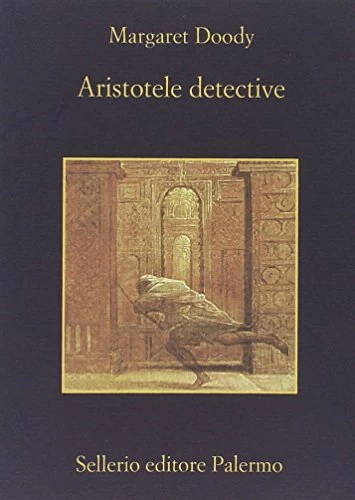
Aristotle detective
Crime fighting in ancient Greece, stories narrated by former pupil Stephanos playing Watson to Aristotle’s Holmes.
Aristotle detective consists of three primary books, and includes one additional book that complement the series but is not considered mandatory reads. The current recommended reading order for the series is provided below.