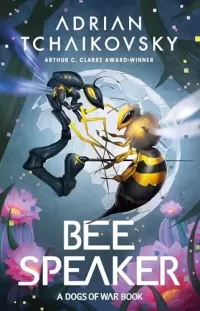
Rex is a Good Dog. He loves humans. He hates enemies. He's utterly obedient to Master.
He's also seven foot tall at the shoulder, bulletproof, bristling with heavy calibre weaponry and his voice resonates with subsonics especially designed to instil fear. With Dragon, Honey and Bees, he's part of a Multi-form Assault Pack operating in the lawless anarchy of Campeche, Southeastern Mexico.
Rex is a genetically engineered bioform, a deadly weapon in a dirty war. He has the intelligence to carry out his orders and feedback implants to reward him when he does. All he wants to be is a Good Dog. And to do that he must do exactly what Master says and Master says he's got to kill a lot of enemies. But who, exactly, are the enemies? What happens when Master is tried as a war criminal? What rights does the Geneva Convention grant weapons? Do Rex and his fellow bioforms even have a right to exist? And what happens when Rex slips his leash?
The series
In a future where the line between soldier and weapon has been erased, engineered creatures—called bioforms—are bred for war, designed for obedience, and optimized for destruction. But what happens when one of them begins to ask why?
Read full series description
Told with chilling intimacy and unsettling foresight, Dogs of War explores the mind of Rex, a loyal canine-shaped bioform built to follow orders without question. He’s part dog, part machine, and entirely lethal. Yet buried beneath the armor and programming lies a flicker of something more—a growing awareness of morality, identity, and the terrifying freedom of choice.
Set against a backdrop of corporate warfare, technological overreach, and a world reckoning with the consequences of its creations, this gripping speculative fiction series doesn’t just imagine a future shaped by biotech—it forces us to question who gets to define humanity in that future. As the story unfolds, so too does Rex’s transformation—from a loyal war dog to something dangerously close to sentient, and far less predictable.
With a tone that is equal parts philosophical and brutal, the series weaves themes of autonomy, loyalty, and the ethics of artificial life into a taut narrative that feels disturbingly relevant. Tchaikovsky’s storytelling is both visceral and cerebral, capturing the tension between evolution and control in a world teetering on the edge of its own making.
Perfect for fans of thought-provoking military sci-fi and bioethics-infused dystopias, this series doesn’t offer easy answers—just hard questions, unforgettable characters, and the kind of moral unease that lingers long after the final page.


Be the first reviewer
Sign in and write the first reader review.