
Latest Book Reviews and Comments

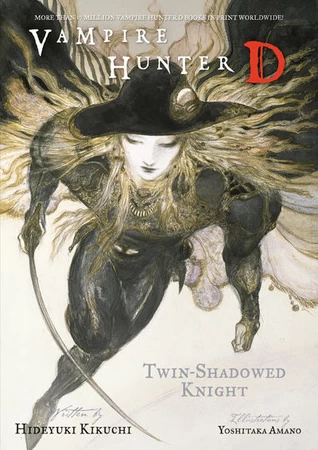
So far in the series D hasn't been the most talkative (anti)hero character, so it's quite odd, yet refreshing that his "other half" turns out to be slightly more talkative thus making D more talkative than usual too. Story take's us closer to D's origin, giving some answers and, of course, bringing out new ones about his history as D, his ever-wicked left hand and "fake D" travel to solve the riddles of hidden place called Muma.
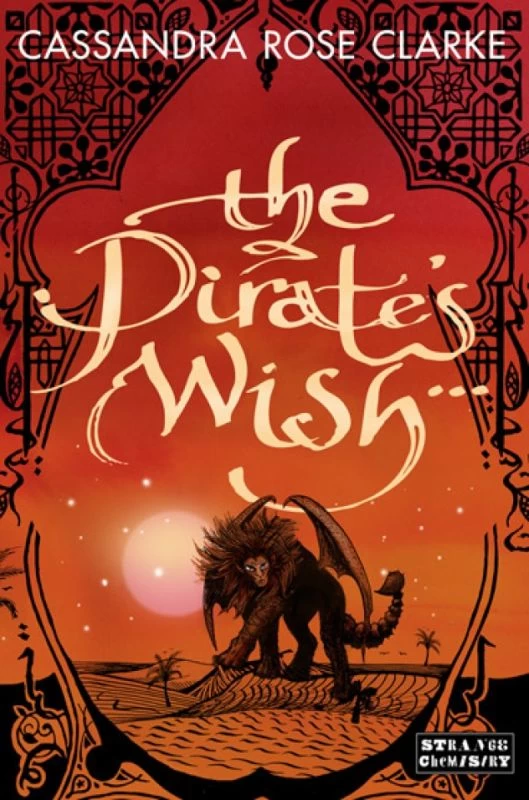
Second part of the Assassin's Curse sweeps through all of the three impossible tasks which can break Naji's curse. As series is said to be duology, the ending surprices slightly by leaving s bittersweet taste to readers mouth since Clarke has used more that one clishé in this story and you are prepared to get some in the end too - and that's when you get a bucket of seawater - warm but salty - to your face. But at least is leaves open possibilities for continuum. Final pages seems to be written in a bit of a rush, but if the clishés and predictability didn't stop you reading the first part, you'll find Pirate's Wish even more addictive.

Shadowfell is young adult fantasy of a girl with gift. Although the story is mainly entertaining the plot of this book is quite simple. What makes the story is the tension game "who can I trust" and the magic of the story. At first I felt like that kind of magic has little use, but near the end I started to think that it has potential for imaginative mind.
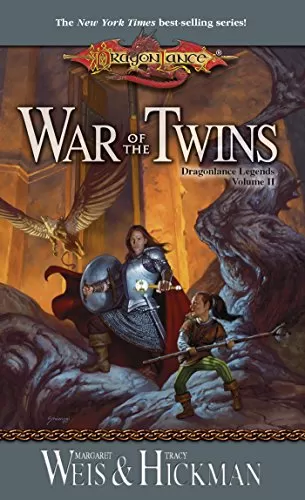
War of the Twins show's the worst sides of Raistlin and yet I never seem to be able to hate him for his actions. I don't think anyone familiar with the twins could. You watch in sadness as he sacrifices anything for his one true love...and you understand him.

I thoroughly enjoyed reading through this book, a collection of three stories set in the same world. The storytelling is rich and brings you into the author's world which is deep and fantastic; it's clear the author has put much work into the world and its history, its denizens and characters. The author is not afraid to do the unexpected, and in telling her stories she shows that no character is truly good or bad, and no character is safe; there is no allegiance to the immortality of main characters here. This gives her so much more freedom to carry along her stories without holding to tropes or cliches. The lack of these things and her originality was a fantastic break from other more predictable stories. What I enjoyed most, apart from a world the author has clearly fleshed out -- and such dedication I admire -- is the depth of characters. There are many, but it doesn't seem like it; each one is unique and intriguing in their own way, and no matter their purpose, I found myself attached to all of them. The combination of characters and world made these stories a great read. I would definitely recommend this to any lover of high fantasy and rich lore.


First of all, let me say that I started to read the Harry Potter series in order to improve my English (although I've exceeded the proper age easily at that time already). My idea was, that children's books were easier to understand than those for adults. So far so good. What I didn't expect was, that the books would be quite unique so that I've re-read them ever since I've laid hands on the first one. It has been described before from persons who are certainly more able than I am, that Ms Rowling has created something special - a world which is not that far away from the ordinary one but still different, full of magic. However, the inhabitants of the other world have to struggle with common problems, too: distrust against each other, enviousness, lovesickness, .... Those are problems where no magic can help. To be honest, I like reading children stories or books for young adults. Somehow it seems to be more suitable when an author invents fantasy worlds for children than for adults - they already live in an own world full of wonders. I liked the idea of describing a young wizard being educated, the daily life in a boarding school, his growing-up with all implications of adolescence and of course the encounters with his adversary. As a conclusion I can only say, that I loved all the books - and still do. So my recommendation can only be: read the series and enjoy the story how it develops through all the books.

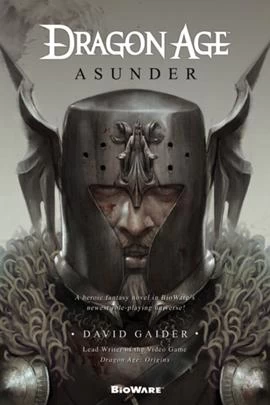
As a reasonably big fan of the Dragon Age series, I thought it might be prudent to read Asunder, which takes place not long after the second game, and offers some insight into what might be happening in the third game. While I have a lot of respect for what goes into the making of video game worlds, and I think Thedas is actually a really wonderfully written world, I think Gaider should avoid writing novels at all costs. The book had some interesting insights, as promised, into the world and upcoming games, and you get to learn a bit more about Wynne and find out what Shale's been up to since the first game. However, it was 414 pages of the most mediocre writing I've ever been exposed to. To say one good thing about the book, possibly the only good thing I have to say, was that Cole was a really interesting character. You spend the entire book wondering exactly what he is, and the way it ended was intriguing enough. Not to say the quality of how he was written was much better than the rest of the characters, but he alone was a reason to keep turning pages. But on to my complaints - let's start with the prose itself. It's flat. It's undynamic. There was not a single sentence that was memorable unless it was so bad that it made me laugh. The descriptive writing is perfectly adequate to set a scene, but he uses the most generic, uninteresting language possible. And every time he does throw in a good line, it seems out of place and awkward against the rest of the writing. Likewise, if he uses a big word, it is again so out of place that it shouts, "Look at how smart I am! Do you see?" And the characters... oh the characters. Gaider seems completely incapable of writing more than about 10 characters total. Every character he's ever written is a derivation of one of these. Examples of these "soggy two-dimensional pieces of cardboard," as a friend of mine puts it: there is Strong Female Lead (played by Evangeline in this book), the tough and moral female character, who often has to struggle between doing what she must and what is right. Then there is Alistair. If you played the first game, you'd know him. He's the handsome and charismatic joker. And I kid you not, Rhys was Alistair. He made the exact same jokes, and was constantly described as "handsome" and "charismatic"... just like Alistair. With no hint of exaggeration, every single one of Rhys' smartass remarks was the exact same thing you would expect to hear Alistair say. In fact, I wouldn't be surprised if some of them were the exact same jokes Alistair made. Also, the jokes were implanted into some of the most inappropriate places in the book - places where it might work if you're listening to your AIs banter in the background in a video game, but definitely not appropriate places for a novel. And flat characters indeed. Their personality traits never feel real, but mostly just tacked on to make them distinguishable from one another. One character, Adrian, has a feisty temper and hates horses, but there's no reason as to why she's got a temper, or why she hates horses. Then it's just mentioned in a throw-away comment that, for some unexplained reason, she now cares deeply for the horses and has named them all. No explanation as to why she had a change of heart, or anything. Nothing has any depth to it. Even the budding romance was based on little more than, "you're actually a rather decent person, and I find you awfully attractive." Another issue I had was that there is no feel of age distinction. Most of the characters are nearing 40 but act as though they're about 18 (incidentally, wasn't that about how old Alistair was supposed to be?), and a letter written in the end by the Lord Seeker, who is a hardened and mean old warrior, read in the exact same way a teenage girl writes a nasty letter to someone she hates. The last major complaint I had was the attempt to make video game battle logic, well, logical. Because let's face it, video game battles have no logic in them, for the most part. When you try to make something like that logical in a book, it just doesn't make sense. For example, one mage casts what was clearly the Firestorm spell from the games, and it saps her dry of mana. If she was a senior enchanter, you'd think she'd have enough mana to cast more than one spell - in the game she would. But she couldn't. And why not bring mana potions, or something? There are writing techniques that work around these awkward situations, but Gaider is apparently not familiar with any of them. It also opens up several plot holes, which basically all amount to Gaider not being able to juggle all the information he's given over the years. For a simple example that doesn't offer any spoilers to this book (minor spoilers for all three games), if Kristoff (DA: Awakening) was dead when possessed by Justice, and his body was rotting, why wasn't Wynne (DA: Origins) rotting in the over ten years she was brought back by a spirit? Gaider has claimed in blogs that if Anders died and Justice repossessed his body at the end of DA2, his body would rot away eventually. So really, the logic doesn't synch up. All-in-all, if you like the game series and the world and want to know more about it, by all means give it a read. It doesn't take long and the story is interesting enough to keep you going. Unfortunately, the quality of the writing is sub-par at best, and it might start to point out some flaws in the logic, which has the possibility to ruin the game for you a bit if you know a lot of the lore already.


"Eoin Colfer". It is almost a new noun. People who read the Artemis Fowl series, Airman and other books written by him, know by now that he has a special way of writing. This has the characteristics of rather sarcastic humour, a he-narrator who, at some exiting point, starts a long explanation which you can only partly understand. This is probably why Colfer must be one the most known writers of this century! If you read other books by him, then you must certainly try "The Reluctant Assassin", the first book in W.A.R.P., which stands for 'Witness Anonymous Relocation Programme'. According to the female protagonist, the CIA probably put the 'Anonymous' in it because [quote by Chevie Savano] 'otherwise they would have WRP and what kind of acronym would that be?' (See what I mean with his way of writing? That way!) If you haven't read any books by Colfer, then this is the time to start with it. If you read other books by Colfer, then you'll notice that he has put in some things from other books. There is a street named Half Moon Street, which comes from the book "Half Moon Investigations" and some people might remember Otto Malarkey and Little Saltee from "Airman". At this time, there have been no mentions of Artemis Fowl, but, well, it's a series about time-travel, so maybe that's for another book in the series. This book is yet another one masterly written! Read it! You won't regret it!

The Lies of Locke Lamora was a hard book to follow, being one of the best first novels from a new author I've ever read. Red Seas Under Red Skies, however, did not fail to impress. What can I say? The pacing, as ever, is phenomenal. There's always a sense of anticipation, amusement, or some other form of entertainment when the sections break off. The story itself was entirely unexected. Whenever you think you have an idea of where it's going, it throws a curve. It induces both laughter and tears, and the ending was not only extremely fast-paced and satisfying, but leaves you with a sense of foreboding going into the next book. All-in-all, another perfect score.
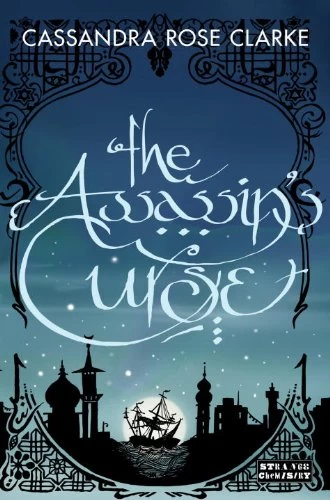
Assassin's Curse is bit clischéis tale of two people, female runaway bride pirate and scarred assassin, but the story is captive in it's simplicity as the two reluctant companions travel together to find the cure for the curse she accindently lands on the assassin by saving his life when he was supposed to kill her instead. Swashbuckling, magic and romance ahead, ohoy! ;)
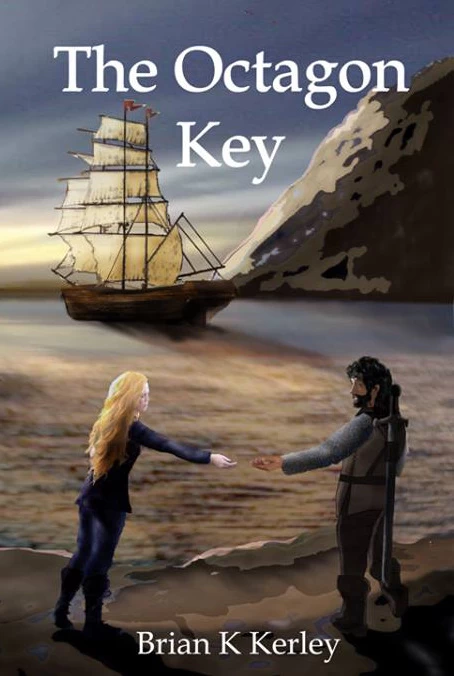
The story develops at a good pace, character development is thorough and engaging. The plot line is interesting and believable as well as a new take on post-space age medieval fiction. The story draws you in and one can only hope the very best and the very worst for the characters as they deserve it. I cannot wait for the next book!! Hurry hurry!!


Any book that contains poisonous sea water, a blind girl who can see more than anybody should, dragons and magic and fire and ice is more than worth my attention...however, this is an epic intro to the Gravedigger Chronicles universe where the world is run by telepaths to whom torture and blackmail are second nature and as such this book instantly goes into my top 5 fantasy books of all time. Read it and love it, thank me later


I love this series for the simple fact that this is the first fantasy I ever read. Pawn was a gift from my sister on my 11th birthday. 22 years later and I'm still an huge fan of the genre. I still re-read this series every few years and it still transports me to that world. Great reccomendation for younger readers or someone that's looking for an easy introduction to the genre


Unfortunately I found this book something of a disappointment, whilst August Derleth's knowledge of H P Lovecraft was extensive I feel that he is guilty of trying to out Cthulhu Lovecraft. The stories themselves lack the mystery of Lovecraft's work and most share a common thread so that reading them in succession becomes almost painful. A book for the Lovecraft completest only.

While I've never played The Witcher video game series, I have watched bits and pieces of it from time to time, and since I liked the world and characters, I thought it could be interesting to read Blood of Elves. Overall, I found this translation to be mediocre. I couldn't say, of course, anything about the original, but the story in itself wasn't particularly enthralling. Nothing actually really happens except a couple people change locations. There is very little description at all, and a lot of free dialogue without any detail into what's happening. There is a lot of character interaction and the dialogue itself is perfectly fine, but when it comes to action, practically nothing happens to further the story. A little fight here, a little betrayal there, but it's fuzzy and you're left thinking you know what happened but you're not entirely sure. There was one chapter, which seemed to be almost entirely pointless. There were no characters introduced that would reappear at any time, no actions or decisions that had later repercussions, and no lessons to be learned that were passed on to any plot further on in the story. It seems like it could definitely be a prelude to something much more interesting, and Geralt, Yennefer, Triss, and Ciri were all incredibly interesting characters. Perhaps that pointless chapter will contain something that will be relevant in another book, but as it stands, it wasn't especially good on any level. That being said, if you enjoyed the games, by all means give the book(s) a read and get a little more insight on the lives and relationships between the characters. I was happy to understand a bit more about the awkward relationship between Geralt, Yennefer, and Triss, myself.

The Name of the Wind is a delightfully well-written fantasy. It was easily one of the best reads I've had in some time. No spoilers: On the plus side of the book, the prose is fantastic. Rothfuss' descriptive capabilities are engrossing and while the pace is meandering, it is so in an enjoyable way. There are enough things to potentially cause danger, and most of them DO cause trouble, but Kvothe is within the realms of what is still expectable from a clever young man. The characters are interesting and intriguing, and you often can't quite pinpoint what an encounter will produce in the long run. Also, this is by far one of the best original worlds I've ever read. Everything from the concept of naming, to magic, fables, songs, currency, professions... it's all beautiful, well-done, realistic, and just generally intricate and wonderful. It's mysterious and enthralling all at once.
This story develops - even for the first part of a trilogy - quite slowly. However, the plot it well designed in a world which can be easily imagined by the reader. It was always thrilling so that I wanted to know how the story goes on. But one thing was quite annoying: the language. There are several simple mistakes in the text which are disturbing ("him" instead of "her", words left out, obviously wrong tenses, ...). Sometimes this made it tiring to follow the story. However, I liked the characters and look forward to meeting them again in part 2.

I don't say this very often but... "Throne of Glass" is better than Artemis Fowl, The Hunger Games, The Curse Workers, Percy Jackson and some other fantastic series combined!!! I really, honestly... don't know how Sarah J. Maas can write such a book. I think this must be one of the three best books I've ever read! Maas creates characters, adventures, worlds and much more which appeal to the imagination! How can she do this? You can't say it's good, or fantastic, or magnificent, or[fill in by yourself]. Those are words who cannot even describe the essence of the story. As one of the official reviews on the Internet said: "I believe the word 'unputdownable' was created for this book"! And even that's wrong, in my opinion. If I ever lose this book, I'm prepared to travel the world just to find a copy of it. Ms. Maas: if you ever read this: I believe you are one of the best writers in history AND I CAN'T WAIT TO READ THE NEXT BOOK!
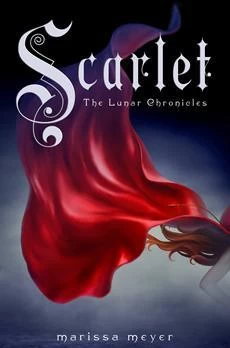
"Scarlet" introduces Scarlet Benoit, based on Little Red Riding Hood. This book is divided into more or less three different sections. First of all, we follow the adventures of Scar (mostly together with Wolf). The second part sees Cinder, together with Captain Thorne, travelling to Europe. (These two parts will eventually get mixed into each other.) And then there are some chapters who focus on emperor Kai, who struggles to find the line between what is right and wrong, what is a lie and what isn't. I read this book in four hours. That means it is a very good book.

"Cinder" is the start of The Lunar Chronicles, which has an interesting theme. Each of the four books introduce a new character (in this book, it's Cinder) which is based on a character of a fairy tale. Cinder is based on Cinderella. If you read the book, it'll be nice to find out that there are some similarities between the fairy tale and the book itself. Except, this is set in a dystopian world of course. However, if you don't/didn't like fairy tales, you still must read the book. Because it is very good.

Since the publication of "Northern Lights" or "The Golden Compass" in the USA in 1995, 18 years have passed since I write this. In those years, many things have changed. First of all, the original series is now completed. Secondly, Pullman has written a few spin-off stories. Thirdly, the world is still waiting for "The Book of Dust", which he is now writing for about 8 years. Fourthly, "Northern Lights" is now a film titled "The Golden Compass" - and unfortunately, the other two books won't be shown on the big screen because in the USA there were not many good reaction to the film. And fifthly, we can easily that "Northern Lights" is one of the most modern classics. It really is a book which will endure the Tooth of Time. Now, millions of copies have been sold and dozens of publications are released. In my opinion: if you haven't read this book, you have missed something extraordinary good, and you don't know real fantasy. Because for me, "His Dark Materials" is a synonym for fantasy.
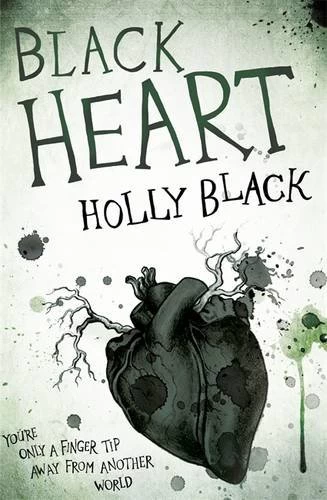
"Black Heart" is end of "The Curse-Workers" Trilogy. Here, Cassel must look for the last resolutions so he can have a better life. In the end, it becomes better then he had expected. A very satisfying end. On The Curse-Workers' old website, there was a page called "Lila Zacharov's 13 Pieces". It were 13 short-stories which were told by Cassel's friend, Lila. The stories were all separate and you could read them in any order to wanted. Unfortunately, since the new website got on air, "13 Pieces" has ended to exist...
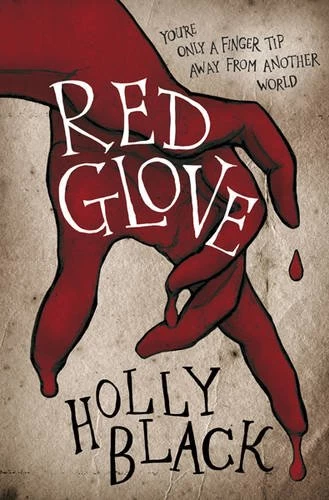
"Red Glove" continues where "White Cat" stopped. Here, it's also Cassel who tells everything, but since you now understand how the curse-workers work, it'll be easier to read. The fantastic tale which started in the first book, continues... Let yourself grabbed by Cassel Sharpe!
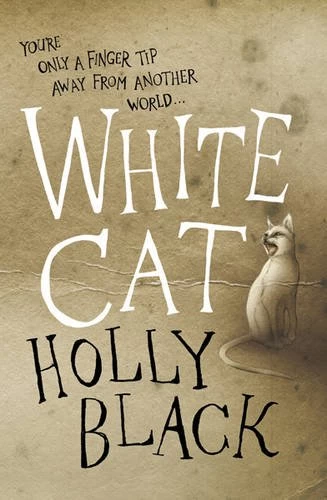
"White Cat" is told from the view of Cassel Sharpe, in the I-person. The story is situated in the nowadays USA. Because Cassel tells everything, he thinks you already know everything there is know, which might make the story a bit confusing at the beginning. Apparently, all over the world, there are people living who are called "curse-workers". Instead of other stories, all other people who aren't curse-workers, know that they exist. These curse-workers have special abilities, of which you can read in the novel. If you are able to understand this and some other strange things, "White Cat" is a very special book. This series is one of my favourites!

This was a beautifully written book with some of the best prose I've ever seen, however, it was very slow to get rolling and didn't get enthralling until it was almost over. I never grew particularly attached to the charcters, in spite of how interesting and well-written they were. However, the story was intriguing enough to see through and I will likely continue with the series.