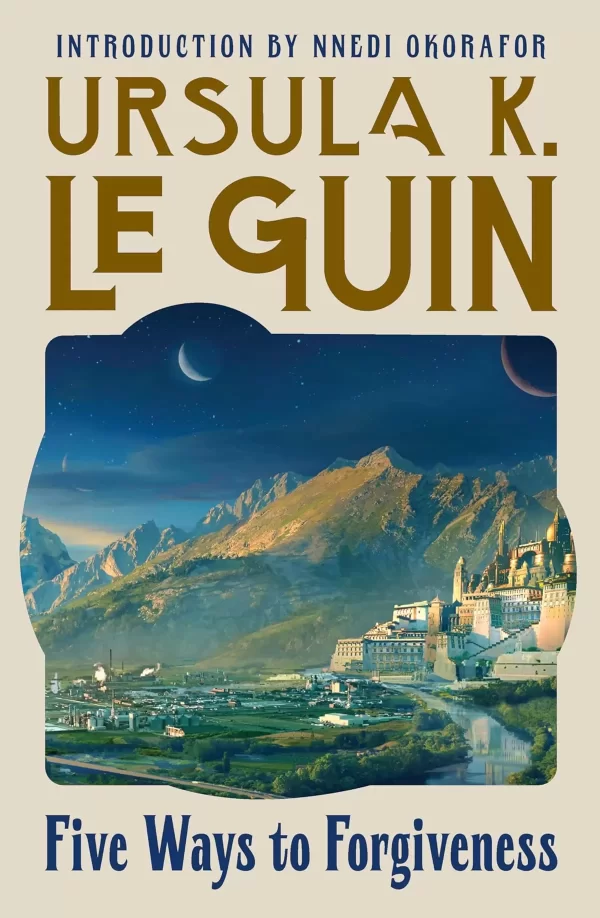
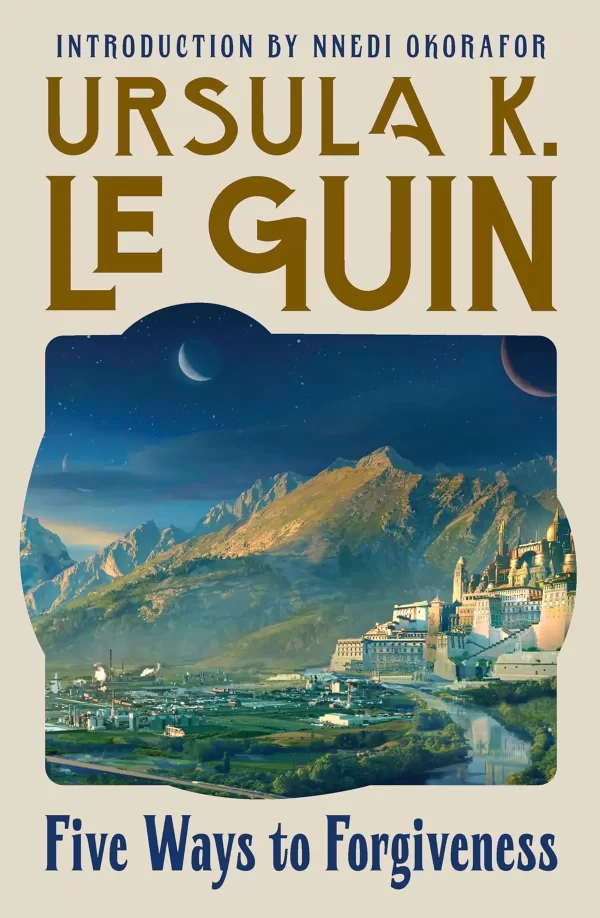
Five Ways to Forgiveness
- Publication
- February 25, 2025
- Publisher
- Union Square & Co.
About the Book
A companion to Ursula K. Le Guin's award-winning Hainish novels—including The Left Hand of Darkness and The Dispossessed—Five Ways to Forgiveness tells the story of the planet Werel and its colony planet Yeowe, and how their societies are shaped by the legacies of slavery and revolution.
When the enslaved people on the colony Yeowe (called "assets") overthrow the slave-holding class (called "owners"), the owners on neighboring Werel launch a war to preserve the master-slave society that undergirds the economy of both planets. Told from the perspectives of people caught in the crosshairs of the struggle, the stories in this collection are linked by the character "Old Music," an Ekumen ambassador who is secretly working as an abolitionist and supporter of Yeowe's emancipation. Together they ask: What does forgiveness look like in a world riddled by racism and caste?
In "Betrayals," a disgraced revolutionary leader makes peace with his past. In the intersectional "Forgiveness Day," a female ambassador from the Ekumen struggles with the patriarchal culture of Werel, while "A Man of the People" tells the life story of a male Ekumen ambassador to Yeowe. "A Woman's Liberation" tells the story of a woman who, after escaping to freedom, must reckon with the internalized racism that still enchains her. And finally, the story "Old Music and the Slave Women" braids the collection together and counts the cost of justice.
First published in 1994 as Four Ways to Forgiveness, this is the first standalone edition that includes the fifth story, "Old Music and the Slave Women," that Le Guin wrote years after to augment this extraordinary, vital suite.