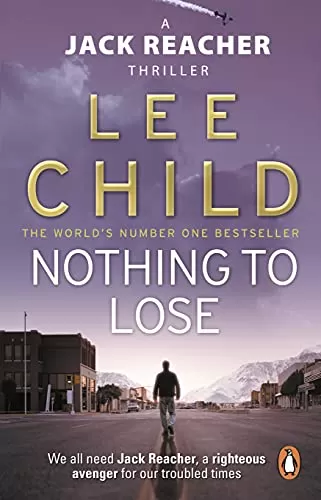
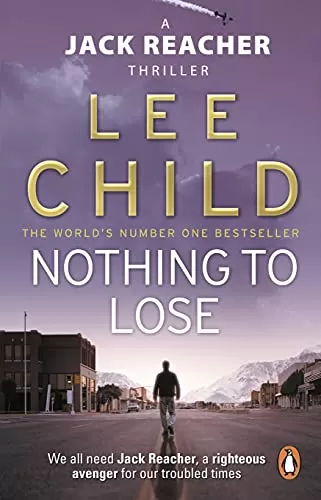
Nothing to Lose
Two small towns in the middle of nowhere: Hope and Despair. Between them, nothing but twelve miles of empty road. Jack Reacher can’t find a ride, so he walks. All he wants is a cup of coffee. What he gets are four hostile locals, a vagrancy charge, and an order to move on. They’re picking on the wrong guy.
Reacher is a hard man. No job, no address, no baggage. Nothing at all, except hardheaded curiosity. What are the secrets that Despair seems so desperate to hide?
With just one ally—a mysterious woman cop from Hope—and many enemies, Reacher goes up against a whole town, hunting the rich man at its core, cracking open his terrifying agenda, asking the question: Who has the edge—a man with everything to gain, or a man with nothing to lose?
Readers also enjoyed
Lee Child
Before he became the architect of modern vigilante fiction, Lee Child was a man on the brink of reinvention. In 1995, after being laid off from his job at Granada Television, he didn’t chase another corporate title. Instead, he sat down and started writing—armed with a blank page, a sharp sense of justice, and the idea of a lone drifter who didn’t belong anywhere but could set things right wherever he landed. That first story became Killing Floor. The character was Jack Reacher. And the rest is a revolution in the thriller genre.
Jack Reacher
He’s just passing through—no destination, no baggage, no need for a second chance. But when trouble brews, he doesn’t look away. He steps in. Quietly. Decisively. And once he does, nothing is ever the same again.
This is the brutal elegance of the Jack Reacher series: a world sketched in sharp edges and hard choices, where justice isn't handed down from above—it’s taken, one broken rule at a time. Each story drops you into a new setting—a forgotten town, a backroad diner, a tense urban sprawl—and strips everything down to essentials: a wrong that needs righting, and a man built to do it. The pacing is relentless, the prose spare, and the tension wired tight from the first page.
Jack Reacher consists of thirty primary books, and includes thirteen additional books that complement the series but are not considered mandatory reads and series is set to expand with the upcoming release of two more books. The current recommended reading order for the series is provided below.