
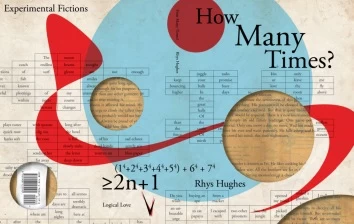
About the Book
Rhys Hughes has never been a stranger to experimental fiction and unusual ways of constructing stories, and this mini-collection gathers some of his most far-reaching examples, placed squarely in the world of OuLiPo writing. Short for Ouvroir de littérature potentielle or the workshop of potential literature, OuLiPo is a grouping of authors who fashion works based on constrained writing techniques – writing that follows rigorous and extremely precise rules concerning structure and layout etc. And here, we encounter works based on rigid numerical constraints, works in the form of grids that can be read in any direction, and a "logico-erotic tale in which the permutations of the sexual acts are based on the workings of logic gates."
The intricacy of construction within these carefully defined restraints is stunning but the resulting literary world is still very much the author’s own, filled with his characteristic sense of humour, the absurd and the fantastical.
This is a slim but large-format book to give space for all the complex layouts, grids, structures etc. that make up these stories.