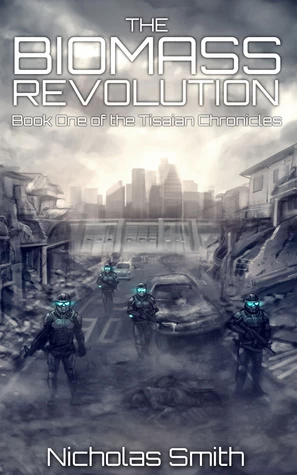
About the Book
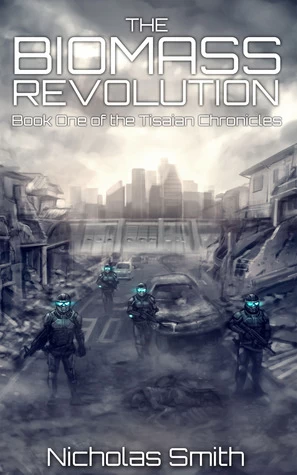
What would you do if you lived in a world where your every move was scrutinized by your own personal artificial intelligence — a world where everything is regulated, from power usage to relationships — a world where everything you thought you knew turned out to be a lie?
Welcome to Tisaia — The last hub of modern civilization in a world left scorched by the nuclear fires of the Biomass Wars. Surrounded by a fortress of steel walls and protected by a fierce and loyal Council of Royal Knights, Tisaia seems relatively safe to the average State worker and citizen. A plentiful supply of Biomass powers the cities and food is abundant, but security has come at a terrible cost. The State will do anything to protect its resources, even if it means suppressing the rights of its citizens and deporting immigrants into the Wasteland — a virtual death sentence.
Spurious Timur is one of the State workers helping keep the wheels of prosperity turning in Tisaia. As he starts to explore Tisaia and question his own worth, he realizes there may be more to his subsistence than he thought. When he meets and falls for co-worker Lana Padilla, he begins to understand he may hold the key to restoring Tisaia to a just and free State.
However, restoring Tisaia will come at a cost; both to Spurious and those he cares about, because in Tisaia nothing is ever what it seems. And as more of his past begins to surface, he is faced with the ultimate decision — on which side of the revolution should he fight?