
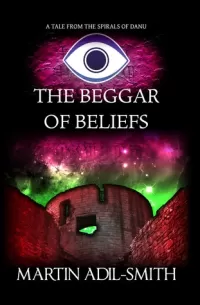
The Beggar of Beliefs
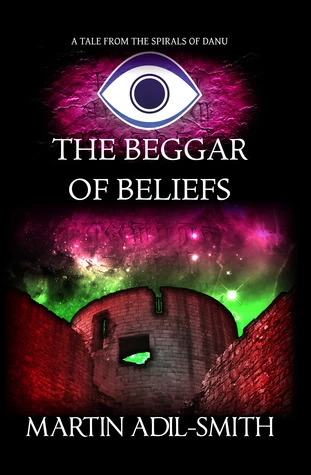
"AREN’T WE ALL ARCHITECTS OF OUR DOWNFALL?"
Freeman Sullivan knows that time is not only against him, but the entire human race.
In the stunning conclusion to ‘A Gathering of Twine’, Freeman tells the
story of George Tate, as the disgraced archaeologist races to not only
find the truth behind the strange inscriptions at Maiden Castle, but
also a means to halt the lengthening of shadows.
Yet there are
dark and powerful forces aligning against him. As The Raven Men pour
through from Sumerland to orchestrate that fall of Man, The Third Twine
must reveal himself in a desperate bid to unlock the secrets of The Lost Citadel and discover the survivors of The Iyrian Empire.
But not everyone is who they claim to be. As our world begins to fail, so are
disguises revealed and mask fall as the battle for all creation reaches
its climax.
Martin Adil-Smith
Martin Adil-Smith was born to a Persian mother and an English father in London, 1978. He completed a BA (Hons) in Criminology at Middlesex University in 1999, before pursuing a career in commercial Real Estate.
Martin’s literary heroes are Stephen King, H. P. Lovecraft, and Anne Rice. He is passionate about music, and in particular lesser known acts such as Paradise Lost, Fields of the Nephilim, and Serpico.
He lives in Scotland, with his wife and daughter and when he is not reading or listening to music, he pretends to write.
The Spirals of Danu
A powerful series that not only questions identity and memory, but also the nature of our creator's hand.
Fast paced with beautifully detailed characters and backdrops, The Spirals of Danu weaves a tale between historical events and fantasy-horror.
Find out what everyone is raving about at The Spirals of Danu.
The Spirals of Danu consists of 5 total books. The current recommended reading order for the series is provided below.
Reviews and Comments

This is a difficult book to review. Not because it is not good - it is excellent. But because what it leaves you with. I finish so many books these days, and that's it. I have left that authors mind and the universe of those characters, never to think of them again. "The Beggar of Beliefs" is wholly different. I found myself looking up the historical events it references, the timelines, the chronologies, even village names and locations... and all because "The Beggar..." has left me with a gnawing sense of doubt that this is not a work of fantastic fiction... but it could very likely be true. I'm not a conspiracy theorist per se. I enjoyed The X-Files, but that was it. But here we have a book the describes, in amazing detail, the Tunguska event, the nuclear tests of Starfish Prime, a mass poisoning in France - and many more - and links them all with a narrative so sinister that Stephen King must surely be jealous. Because what the author has done is nothing short of remarkable; he has proved the existence of God... but then has also explained that pain and suffering is not just allowed to happen, but it is actively fermented by the shadowy Raven Men, who are heralds of a malevolent Creator. Now I can sit here and scoff and jeer. But when I look at all the violence undertaken "in the name of religion", suddenly I'm not so sure. And when I start to look up key characters, the mocking leaves me completely. George Tate lives, as does Colin Denoon, Sam Cotrahens and a myriad of others. And isn't that the mark of great book? Not just one that sucks you in from the first page, but makes you believe. And I sit here, on cold and stormy night, and I find myself believing in the realm of Sumerland and all its darkness. And that makes me very, very afraid. One for open minded horror lovers everywhere.