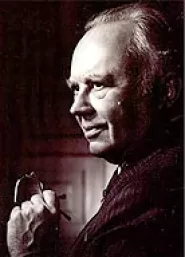
Widely regarded as the founder of the
modern conservative movement, Russell Kirk was a noted man of letters
whose prodigious literary career included a syndicated newspaper column
and a regular page in National Review. This volume demonstrates another
compelling side of Kirk — the imaginative author who could communicate
his powerful vision through the dramatic genre of the ghost story.
Ancestral Shadows collects nineteen of Kirk's best ghostly tales from periodicals and anthologies published throughout his life. In the tradition of
Defoe, Stevenson, Hawthorne, Coleridge, Poe, and other master writers,
these frightful stories conjure the creaks and shadows of the very
places where they came to life through Kirk's pen: haunted St. Andrews,
the Isle of Eigg, Kellie Castle, Balcarres House, Durie House ("which
has the most persistent of all country-house specters"), and Kirk's own
ancestral spooky house in Mecosta, Michigan.
The volume ends
with "A Cautionary Note on the Ghostly Tale," an incisive piece in which Kirk reflects on why he writes such stories." All important literature
has some ethical end," Kirk says, "and the tale of the preternatural —
as written by George Macdonald, C. S. Lewis, Charles Williams, and other masters — can be an instrument for the recovery of moral order."
Masterfully crafted, Kirk's Ancestral Shadows will enthrall and delight all lovers of ghost stories.
Contents:
- Introduction by Vigen Guroian
- Ex Tenebris
- Behind the Stumps
- Uncle Isaiah
- The Surly Sullen Bell
- Balgrummo's Hell
- Lex Talionis
- What Shadows We Pursue
- The Cellar of Little Egypt
- Fate's Purse
- The Princess of All Lands
- Sorworth Place
- Saviourgate
- The Last God's Dream
- The Peculiar Demesne of Archvicar Gerontion
- There's a Long, Long Trail A-Winding
- Watchers at the Strait Gate
- The Reflex-Man in Whinnymuir Close
- The Invasion of the Church of the Holy Ghost
- An Encounter by Mortstone Pond
- A Cautionary Note on the Ghostly Tale (essay)