
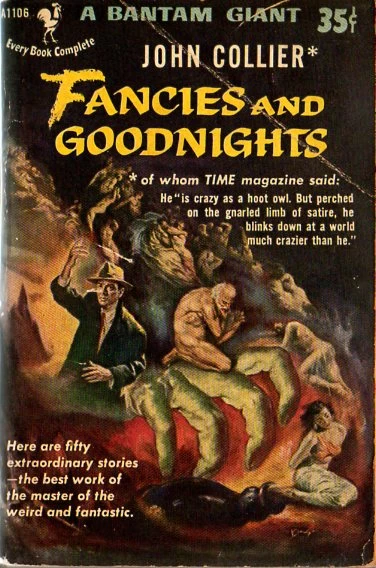
About the Book
John Collier's edgy, sardonic tales are works of rare wit, curious insight, and scary implication. They stand out as one of the pinnacles in the critically neglected but perennially popular tradition of weird writing that includes E.T.A. Hoffmann and Charles Dickens as well as more recent masters like Jorge Luis Borges and Roald Dahl. With a cast of characters that ranges from man-eating flora to disgruntled devils and suburban salarymen (not that it's always easy to tell one from another), Collier's dazzling stories explore the implacable logic of lunacy, revealing a surreal landscape whose unstable surface is depth-charged with surprise.
Contents:
- Bottle Party
- De Mortuis
- Evening Primrose
- Witch's Money
- Are You Too Late or Was I Too Early
- Fallen Star
- The Touch of Nutmeg Makes It
- Three Bears Cottage
- Pictures in the Fire
- Wet Saturday
- Squirrels Have Bright Eyes
- Halfway to Hell
- The Lady on the Grey
- Incident on a Lake
- Over Insurance
- Old Acquaintance
- The Frog Prince
- Season of Mists
- Great Possibilities
- Without Benefit of Galsworthy
- The Devil George and Rosie
- Ah the University
- Back for Christmas
- Another American Tragedy
- Collaboration
- Midnight Blue
- Gavin O Leary
- If Youth Knew If Age Could
- Thus I Refute Beelzy
- Special Delivery
- Rope Enough
- Little Memento
- Green Thoughts
- Romance Lingers Adventure Lives
- Bird of Prey
- Variation on a Theme
- Night Youth Paris and the Moon
- The Steel Cat
- Sleeping Beauty
- Interpretation of a Dream
- Mary
- Hell Hath No Fury
- In the Cards
- The Invisible Dove Dancer of Strathpheen Island
- The Right Side
- Spring Fever
- Youth from Vienna
- Possession of Angela Bradshaw
- Cancel All I Said
- The Chaser
Get the book Buy or listen