The Poison Belt
"Nothing could be done. The thing was universal and beyond our human knowledge or control. It was death for young and old, for weak and strong, for rich and poor, without hope or possibility of escape."
Just returned from his famous adventure in the Lost World, the resourceful Professor George Challenger faces his greatest danger yet: Earth will pass through a belt of poisonous ether, and mankind might not survive. As the poison enters the atmosphere, terror and madness sweep the globe. Cities are wracked by riots, societies crumble, and soon all communication ceases. Professor Challenger and his friends, barricaded in a sealed room, can only watch their planet die.
Readers also enjoyed
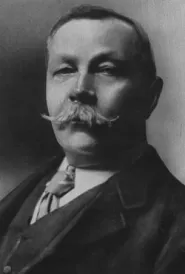
Sir Arthur Conan Doyle
Long before crime fiction became a genre, there was Sherlock Holmes—and behind him, the mind of Sir Arthur Conan Doyle: physician, spiritualist, and literary architect of deduction itself. He didn’t just create a detective; he carved out an entire way of thinking, a cold, rational clarity that sliced through Victorian fog like a magnifying glass catching the morning sun.
Born in 1859 in Edinburgh, Doyle was a man of science before he was a man of letters. Trained as a doctor, he brought a clinical precision to his writing that made Holmes’s logic feel almost forensic in an age when forensic science was still in its infancy. The A Study in Scarlet debut in 1887 wasn’t just the birth of a character—it was the birth of modern detective fiction. And yet, Doyle always saw Holmes as a side project. It was his historical novels, like The White Company, that he considered his serious work.