
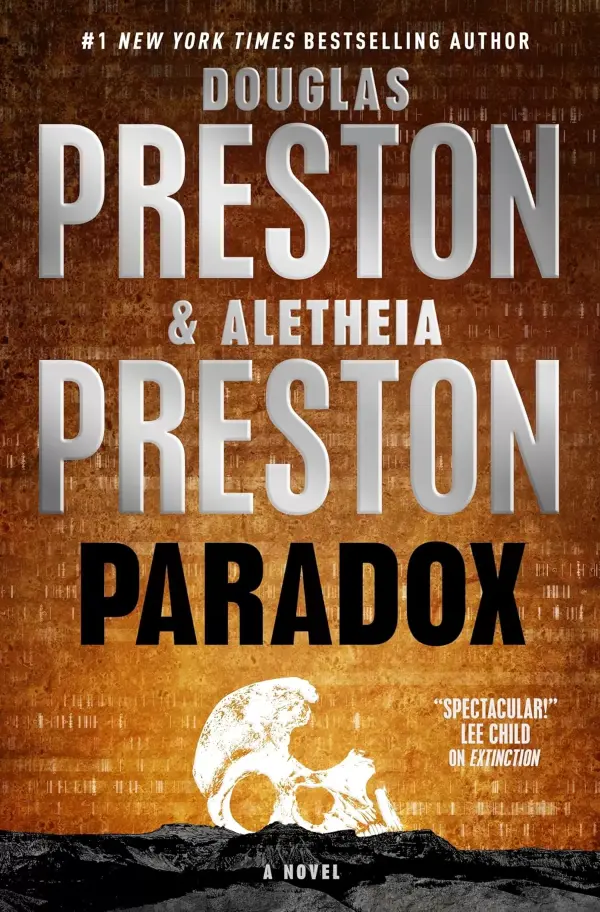



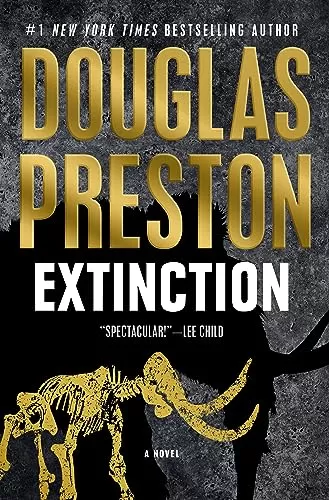

Author
Douglas Preston
Some thriller writers chase danger. Douglas Preston studies it, dissects it, and then quietly lets it loose on the page. Born in Cambridge, Massachusetts in 1956 and educated in English literature at Pomona College, Preston’s early path did not begin in a writer’s garret but inside the halls of the…
Read moreShow less
Some thriller writers chase danger. Douglas Preston studies it, dissects it, and then quietly lets it loose on the page.
Born in Cambridge, Massachusetts in 1956 and educated in English literature at Pomona College, Preston’s early path did not begin in a writer’s garret but inside the halls of the American Museum of Natural History in New York. Working as an editor and publications manager, he absorbed the language of scientists, curators, and explorers. The experience left a permanent imprint. Laboratories, expedition camps, museum basements, and forbidden archives would later become the living, breathing settings of his fiction.
Preston rose to international prominence through his long collaboration with Lincoln Child. Together they introduced readers to the enigmatic FBI agent Aloysius Pendergast in Relic, a novel that fused forensic investigation, evolutionary theory, and gothic menace inside a Manhattan museum. The book’s success, including a film adaptation, launched the long running Pendergast series, now considered a cornerstone of modern techno-thrillers and crime fiction. The series stands out for its blend of meticulous research and atmospheric suspense, pairing high concept science with deeply human obsessions.
While the partnership brought global bestseller status, Preston’s solo work reveals the breadth of his interests. In novels such as The Codex and the Wyman Ford series, he explores cryptography, lost civilizations, artificial intelligence, and moral ambiguity. His nonfiction moves even closer to the edge of reality. The Monster of Florence, co-written with Italian journalist Mario Spezi, plunges into a chilling true crime investigation that led Preston himself into legal trouble in Italy. In The Lost City of the Monkey God, he recounts a real expedition into the Honduran jungle in search of a legendary civilization, blending immersive reporting with the pacing of a thriller.
A hallmark of his writing is plausibility. Scientific theories are not decorative backdrops but engines of tension. Archaeology is not romantic nostalgia but a risky confrontation with the unknown. Preston’s thrillers often hinge on one unsettling idea, what if the boundary between credible science and catastrophe is thinner than we think?
Beyond novels and narrative nonfiction, he has written for publications such as The New Yorker, National Geographic, and Smithsonian, bringing the same narrative intensity to essays about exploration and discovery. His books have topped the New York Times bestseller list and have been translated worldwide, cementing his place among the most widely read contemporary thriller authors.
Yet what continues to define his career is curiosity. Whether tracing the path of a Renaissance manuscript, investigating a serial killer, or imagining a rogue scientific breakthrough, Preston writes with the mindset of an investigator. He invites readers to step into the archive, the jungle, the lab, then asks a simple question: what if the search for knowledge comes with consequences no one can control?
In the realm of suspense fiction grounded in real science, few voices feel as convincingly dangerous.
AUTHOR CAREER
Publication timeline
Published and upcoming books by publication year. Undated TBA titles are excluded.
Select a year to see its books and known publication months.
THE AUTHOR’S WRITING
Writing profile
Genres are based on books catalogued in Risingshadow’s English-language database. A book may belong to multiple genres.
Main classification
Each book counts once. Multiple primary genres use the shared presentation order; books without a primary genre are Other.