
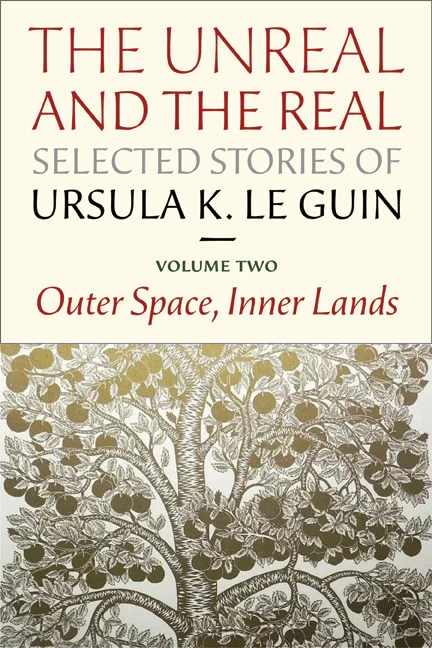

Author
Ursula K. Le Guin
In a literary landscape often dominated by action and conquest, Ursula K. Le Guin carved quiet, radical paths—through forests of magic, across alien planets, and into the deep folds of human nature. Her stories didn’t shout; they asked, wondered, and listened. Through them, she reimagined what scie…
Read moreShow less
In a literary landscape often dominated by action and conquest, Ursula K. Le Guin carved quiet, radical paths—through forests of magic, across alien planets, and into the deep folds of human nature. Her stories didn’t shout; they asked, wondered, and listened. Through them, she reimagined what science fiction and fantasy could be—not just a reflection of our world, but a transformation of how we see it.
Born in 1929 to a family steeped in stories and scholarship—her father was an anthropologist, her mother a writer and the biographer of Ishi—Le Guin was raised among mythologies, cultural curiosity, and a profound respect for the power of narrative. These early influences are stitched into every book she wrote, from A Wizard of Earthsea to The Left Hand of Darkness.
Her science fiction was never just about technology or alien landscapes. Instead, Le Guin used speculative settings to explore themes of gender, power, language, and balance. In The Left Hand of Darkness, she envisioned a world without fixed gender roles long before mainstream conversations began catching up. In The Dispossessed, she built an anarchist society and interrogated what freedom really means. Always, her stories resisted easy answers.
Le Guin’s writing style was spare yet lyrical, rich with poetic rhythm and a deep sense of philosophical quiet. She once said, “Hard times are coming, when we’ll be wanting the voices of writers who can see alternatives to how we live now.” She was one of those voices—visionary not because she predicted the future, but because she dared to imagine futures that didn’t mirror the mistakes of the past.
Over her lifetime, she won almost every major award in speculative fiction—Hugo, Nebula, Locus, and National Book Awards among them. But perhaps her most enduring legacy is how she reshaped the boundaries of genre. Le Guin didn’t just write fantasy and science fiction—she elevated them, proving they could be vessels for philosophy, sociology, and poetry.
She lived most of her life in Portland, Oregon, far from the publishing epicenters of New York or London. That distance seemed fitting—Le Guin always stood just outside the expected, looking in with clear eyes and quiet defiance. She passed away in 2018, but her words remain—to comfort, to provoke, and to remind readers that power and gentleness are not opposites.
Whether you're discovering the Archipelago of Earthsea or walking the icy plains of Gethen, Le Guin's stories don’t just transport you—they transform you. In her universe, the journey is never just across space, but inward, toward empathy, understanding, and change.
AUTHOR CAREER
Publication timeline
Published and upcoming books by publication year. Undated TBA titles are excluded.
Select a year to see its books and known publication months.
THE AUTHOR’S WRITING
Writing profile
Genres are based on books catalogued in Risingshadow’s English-language database. A book may belong to multiple genres.
Main classification
Each book counts once. Multiple primary genres use the shared presentation order; books without a primary genre are Other.