

Author
Emma Mieko Candon
Emma Mieko Candon writes the kind of science fiction that feels both ancient and startlingly new. Her stories wander through landscapes filled with fractured gods, haunted technologies, impossible loyalties, and people trying to make sense of worlds that no longer follow familiar rules. Rather than…
Read moreShow less
Emma Mieko Candon writes the kind of science fiction that feels both ancient and startlingly new. Her stories wander through landscapes filled with fractured gods, haunted technologies, impossible loyalties, and people trying to make sense of worlds that no longer follow familiar rules. Rather than treating futuristic ideas as cold thought experiments, she approaches them as deeply human questions, exploring memory, identity, grief, love, and the strange ways people survive after catastrophe.
A Japanese American author with roots in Hawaii, Candon first discovered a love of storytelling while writing alongside friends as a teenager. That early fascination eventually grew into a career that bridges literature, speculative fiction, and editorial work. She has described herself as an "escaped academic," a phrase that captures the intellectual curiosity woven throughout her novels, where language, history, culture, and technology often collide in unexpected ways.
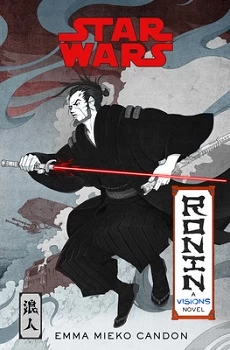
Many readers first encountered her work through the acclaimed novel Star Wars: Ronin, a bold reimagining of the Star Wars mythos inspired by Japanese storytelling traditions. The book became a bestseller and introduced a distinctive voice capable of honoring beloved genre conventions while reshaping them into something uniquely personal.
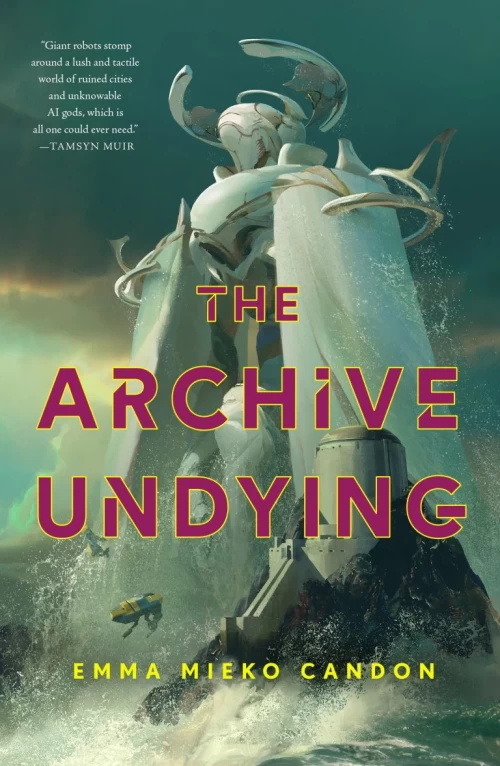
Candon's original fiction reaches even further into uncharted territory. In The Archive Undying, the opening volume of the Downworld Sequence, she blends giant mecha, fallen AI deities, queer relationships, and post-apocalyptic worldbuilding into a dense, immersive narrative unlike most contemporary science fiction. The novel earned attention for its ambitious vision and was shortlisted for a Lambda Literary Award, cementing her reputation as a writer unafraid to challenge readers while rewarding them with richly layered worlds.
Across her work, recurring themes emerge: the cost of devotion, the weight of history, the nature of consciousness, and the fragile connections that persist even when civilizations collapse. Her fiction often embraces complexity rather than easy answers, inviting readers into stories where artificial gods can be mourned, machines can carry emotional scars, and survival is rarely as simple as winning or losing.
Today, Emma Mieko Candon stands out as one of the more distinctive voices in modern speculative fiction. Whether writing space fantasy, literary science fiction, or stories that blur the line between the two, she continues to create worlds filled with wonder, uncertainty, and the lingering ghosts of both humanity and technology.
Books by this author
3 books in this view
THE AUTHOR’S WORLDS