Risingshadow has the honour of publishing a guest post by Gregory A. Wilson.
Gregory A. Wilson is Professor of English at St. John's University in New York City, where he teaches creative writing and fantasy fiction along with various other courses in literature. His first academic book was published by Clemson University Press in 2007; on the creative side, he has won an award for a national playwriting contest, and his first novel, a work of fantasy entitled The Third Sign, was published by Gale Cengage in the summer of 2009. His second novel, Icarus, will be published as a graphic novel by Silence in the Library Publishing in 2016, and he has just signed a three book deal with The Ed Greenwood Group, which will be publishing his Gray Assassin Trilogy beginning with his third novel, Grayshade, in 2016. He has short stories out in various anthologies, including Time Traveled Tales from Silence in the Library, When The Villain Comes Home, edited by Ed Greenwood and Gabrielle Harbowy, and Triumph Over Tragedy, alongside authors like Robert Silverberg and Marion Zimmer Bradley, and he has had three articles published in the SFWA Bulletin.
He is a regular panelist at conferences across the country and is a member of the Gen Con Writers' Symposium, the Origins Library, Codex, Backspace, and several other author groups on and offline. On other related fronts, he did character work and flavor text for the hit fantasy card game Ascension: Chronicle of the Godslayer, and along with fellow speculative fiction author Brad Beaulieu is the co-host of the critically-acclaimed podcast Speculate! The Podcast for Writers, Readers and Fans, a show which discusses (and interviews the creators and illustrators of) speculative fiction of all sorts and types. He lives with his wife Clea and daughter Senavene–named at his wife's urging for a character in The Third Sign, for which his daughter seems to have forgiven him–in Riverdale, NY.
Links
GUEST POST: THE CONSCIENCE OF A KILLER BY GREGORY A. WILSON
 Judging by the current television show lineup, there’s a certain fascination with the mind of a killer: The Blacklist, Criminal Minds, Law and Order: Criminal Intent, Dexter (not running any more, but you get the point), and the list goes on. Movies and books aren’t immune to this appeal either, with characters from Silence of the Lambs’ Hannibal Lecter to Batman’s Joker to Sherlock Holmes’ Professor Moriarty drawing an inordinate amount of attention from the viewing and reading public. Part of this stems from a desire to find a suitable antagonist, no doubt; outthinking a particularly challenging (and malevolent) intelligence is especially enjoyable for readers. But it can’t just be about that; the phenomenon where viewers/readers often view the villain as more compelling than the hero suggests that it isn’t just mental complexity we’re looking for. It’s motivation. We want to know why someone is doing something—or at least get a sense that the reasons are deep and surprising, if they remain mysterious and opaque to us. Or to be more precise, we want to know why someone is doing something we, and society, wouldn’t do.
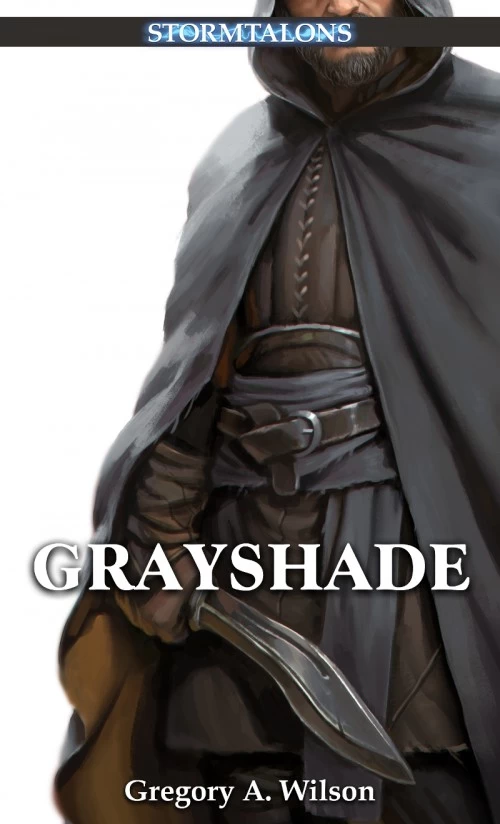
That exploration of the unthinkable—what makes someone do something we wouldn’t—is part of what I enjoyed the most in writing my novel Grayshade, first book in The Gray Assassin Trilogy from The Ed Greenwood Group. Grayshade is an Acolyte in the Order of Argoth, an influential religious organization in the city of Cohrelle; the Acolytes are essentially elite assassins, trained to eliminate targets given to them by their superiors in the name of Argoth, the Just God. Grayshade is the best of the best, having plied his trade for a decade, and for most of that time his faith has held his world together. But there are fault lines; the impact of Grayshade’s line of work has taken its toll on him, and as the book begins, a mission which doesn’t go as planned raises questions about the nature of his orders and the foundation of his belief.
In creating the character of Grayshade I was most influenced by Edward Woodward’s Robert McCall, better known during the 80s TV show where he first appeared as The Equalizer. Like McCall, Grayshade is intelligent and thoughtful, and while charm isn’t as evident in The Acolyte as it can be in The Equalizer, both have to rely on a network of informants and allies to accomplish their various tasks...which means that having a certain knowledge of psychological manipulation is necessary for the job. But both characters, like Jason Bourne (a later influence on my work), are fundamentally broken people. No matter how they justify their pasts, the impact of killing over and over again has an impact, particularly when one’s conscience is still intact. None of them are psychopaths; none would kill for money, or sadistic enjoyment of other people’s pain. And when it becomes clear that the reasons they thought justified their actions were perhaps not as compelling as they might have believed, everything they’ve done is brought into question as well.
Part of what makes this an interesting situation to explore is how little the character himself understands about what has been done to him, at least at first. Grayshade is world-weary and cynical; he thinks things through carefully at all times, and is always aware of his environment, including people within it and their (often) negative reactions to him and his profession. He knows he wouldn’t win a popularity contest. Yet he doesn’t realize how much the killing itself, time after time after time, has eroded his moral core, which tells him he is doing what he must in an imperfect and difficult world. The reader is aware of this erosion before Grayshade himself—and the real battle in the book takes place within himself as he realizes what he’s done, and wonders what he might be able to do to make amends. Like everything else he does, this process is methodical and steady, and the readers get to take part in the process with him and (hopefully) build identification with him as they do so.
What it comes down to, ultimately, is the desire to understand the human heart a bit better—what drives us to do what we do in our lives, even when what we do seems inconceivable to others. In Grayshade and the books to follow I’ve tried to explore those motivations in one complex, guarded, but compelling character, and I hope my readers find that exploration as enjoyable as I have.